October marks several important observances, including National Disability Employment Awareness Month (NDEAM), Dyslexia Awareness Month, ADHD Awareness Month, and Down Syndrome Awareness Month. Each offers an opportunity to learn about different experiences and challenge misconceptions. At Garten, we’d also like to consider how we can build a more inclusive community through these discussions.
This year’s NDEAM theme, “Celebrating Value and Talent,” reminds us that people with disabilities bring valuable skills, perspectives, and experiences to their workplaces and communities. But recognizing those contributions starts with listening to people with disabilities, believing their experiences, and seeing each person for more than a diagnosis.
These October observances connect directly to that mission by reminding us that inclusion is not just about awareness.
Dyslexia Awareness Month: Looking Beyond the Myths
Dyslexia is a learning difference that can affect reading, spelling, writing, and the way a person processes written language. Dyslexia does not indicate low intelligence, laziness, or a lack of effort. It also does not simply mean seeing letters backward.
Dyslexia is more common than many people realize. The International Dyslexia Association estimates that 15% to 20% of the population may experience some symptoms of dyslexia, including difficulties with reading accuracy, spelling, or writing. Yale’s Center for Dyslexia and Creativity notes that dyslexia accounts for approximately 80% to 90% of people with learning disabilities.
Dyslexia does not end when someone leaves school. Adults can continue to navigate challenges with reading, writing, and processing written information. Someone may have valuable knowledge and strong problem-solving skills while needing additional time to read instructions or process written material.
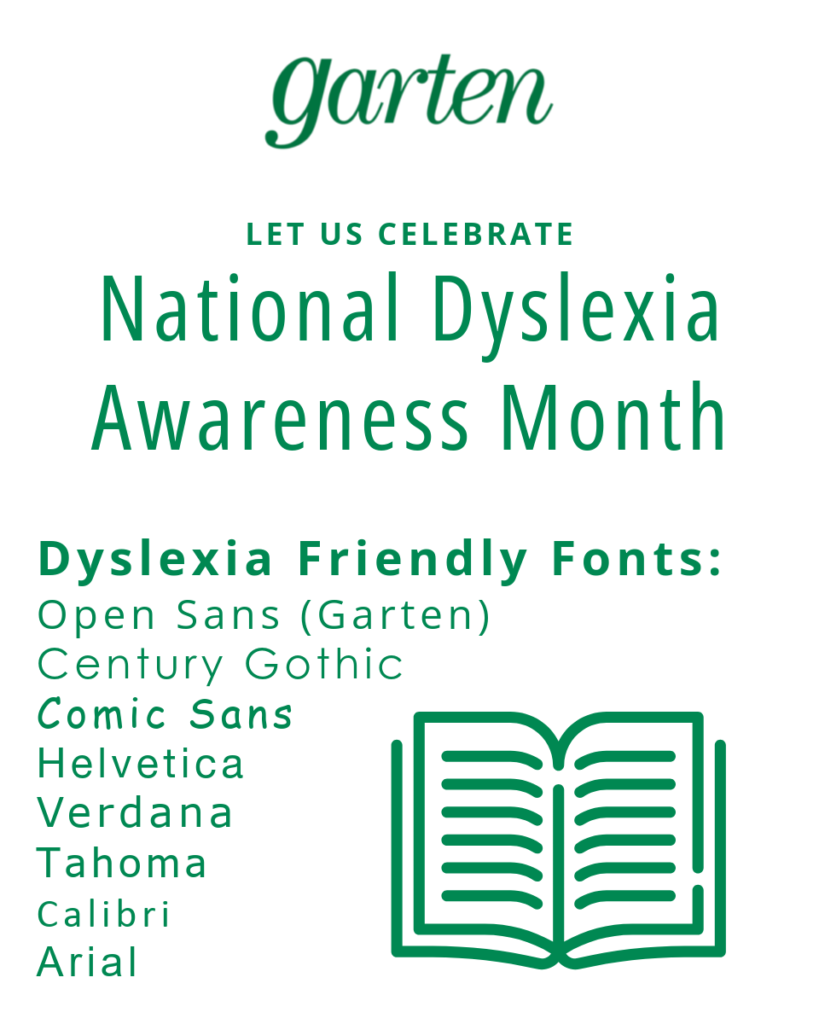
Small changes can make communication more accessible. Clear instructions, well-organized documents, readable fonts, and multiple ways to access information can help people engage with written material. Garten uses Open Sans in its branding, a font often considered readable and accessible for many people with dyslexia. However, accessibility is not one-size-fits-all, and individuals may have different preferences and needs.

ADHD Awareness Month: Understanding What You Cannot Always See
Attention-deficit/hyperactivity disorder, or ADHD, is often misunderstood as simply being energetic, distracted, or easily bored. In reality, ADHD is a neurodevelopmental condition that can affect attention regulation, impulse control, organization, working memory, time management, and the ability to begin or complete tasks. Experiences vary significantly from person to person.
ADHD is more common than many people realize. According to the Centers for Disease Control and Prevention (CDC), an estimated 7 million U.S. children ages 3–17, or 11.7%, currently have an ADHD diagnosis. ADHD also affects adults. A 2023 CDC study estimated that 15.5 million U.S. adults, or 6% of the adult population, had a current ADHD diagnosis. Notably, 55.9% of adults with ADHD in that study received their diagnosis at age 18 or older. These findings highlight that ADHD is not just a childhood experience.
Some challenges associated with ADHD can be difficult for others to recognize. A person might work hard to meet a deadline while struggling to estimate how long a task will take. They might forget an appointment despite caring deeply about it, lose track of important items, or find it difficult to begin a task even when they understand exactly what needs to be done.
When others interpret these challenges as laziness, carelessness, or a lack of commitment, the result can be frustration and unfair judgment.
Listening is especially important. Even people who share an ADHD diagnosis may experience it differently. One person’s experience cannot speak for everyone, and assumptions based on social media or stereotypes rarely capture the full picture. People with ADHD are the experts on their own experiences, and taking those experiences seriously is an important part of building understanding.
Down Syndrome Awareness Month: Recognizing the Whole Person
Down Syndrome is the most common chromosomal condition in the United States. The Centers for Disease Control and Prevention (CDC) estimates that approximately 5,775 babies are born with Down Syndrome in the United States each year, or roughly one in every 700 births.
Down syndrome occurs when a person has an extra full or partial copy of chromosome 21.
There are three main types of Down syndrome. Approximately 95% of cases are trisomy 21, about 3% are translocation, and roughly 2% are mosaicism. Although these types describe genetic differences, they do not tell the full story of an individual’s abilities, personality, interests, or goals.
People with Down syndrome may also experience certain health conditions. According to the CDC, approximately 50% to 65% of babies born with Down syndrome have a congenital heart defect. Hearing loss, obstructive sleep apnea, and vision problems are also more common. Advances in healthcare have helped improve life expectancy, which is now approximately 60 years. These medical facts are important, but they should never become the only way we understand someone.
Although perspectives have changed, outdated assumptions can still shape how people are treated and which opportunities they are offered.
National Disability Employment Awareness Month: Celebrating Value and Talent
Employment disparities remain significant. In 2025, the unemployment rate for people with disabilities was 8.3%, compared with 4.1% for people without disabilities. Only 22.8% of people with disabilities ages 16 and older were employed.
Inaccessible hiring processes, misconceptions about disability, and limited workplace accommodations can create unnecessary barriers. Employers can promote inclusion through accessible applications, clear expectations, reasonable accommodations, and supportive workplace cultures.
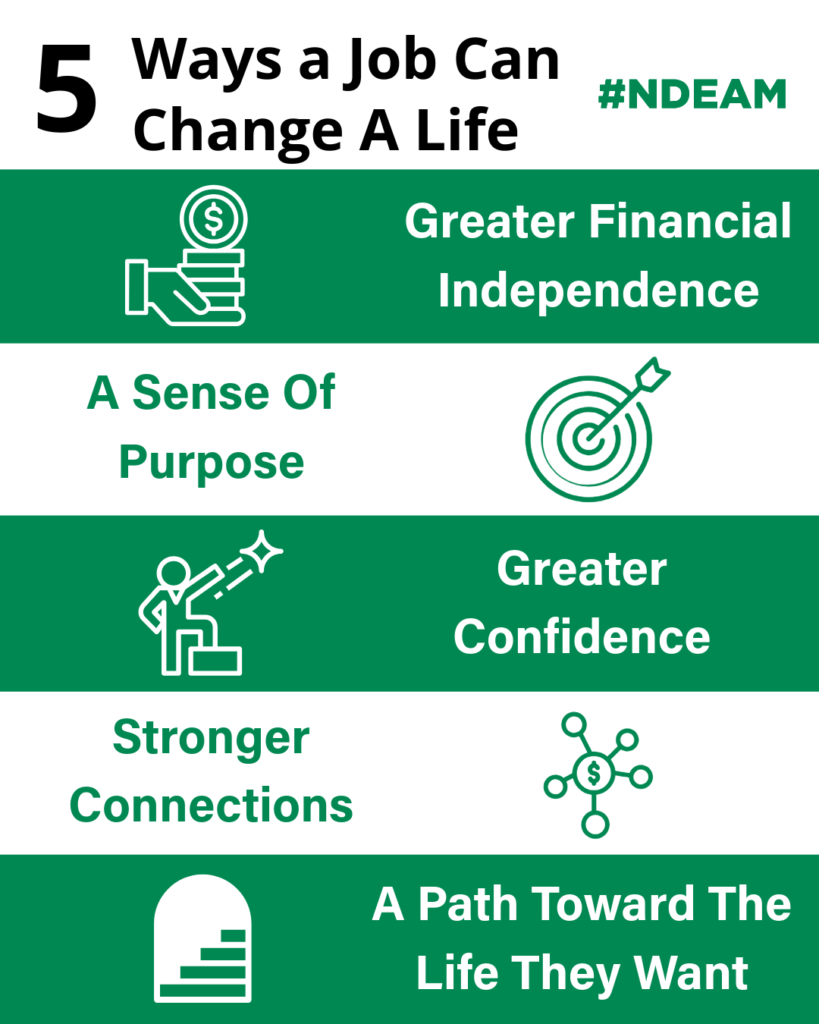
At Garten, this commitment is central to our mission: to advance employment for people with disabilities, creating life-changing impact through genuine belonging. Meaningful employment can foster independence, personal growth, and community connection.
Turning Awareness Into Action
Although each October observance highlights different experiences, they share an important lesson: awareness matters most when it changes how we treat people.
We can challenge misconceptions about dyslexia, recognize the often-invisible challenges associated with ADHD, celebrate the individuality of people with Down syndrome, and create workplaces where people with disabilities have meaningful opportunities to succeed.
We can also make a commitment to listen. Rather than assuming we understand someone’s experience, we can ask respectful questions, take their answers seriously, and recognize that no two people experience disability in exactly the same way.
Garten encourages our community to look beyond diagnoses and stereotypes and recognize the value, talent, and potential of people with disabilities. By listening, removing barriers, and creating opportunities for genuine participation, we can help build a community where everyone has the chance to belong.
That is what celebrating value and talent looks like.